Portbou: A Different Perspective on Costa Brava
Located in northeastern Spain, the Costa Brava offers much more than a traditional seaside holiday. Its appeal lies in the variety of experiences it brings together, from coastal walks and water sports to local gastronomy, architectural heritage and centuries of regional history. Portbou is an excellent example of thes less familiar side of the Costa Brava. Rather than being defined exclusively by tourism, the town has developed around its strategic position on the Spanish-French frontier.
A Few Words about the History of Portbou
Located in the Alt Empordà region of Girona province, Portbou nestles between steep hillsides overlooking a small bay on the Mediterranean coast. This peculiar landscape has shaped the town’s compact urban layout, while its position on the Spanish-French border has played a defining role in its development. Indeed, the arrival of the railway in the nineteenth century marked a turning point, transforming Portbou into an important hub for cross-border transport and international travel. During the Second World War, this same strategic location took on a different significance, as the town became a transit point for people fleeing persecution and political violence.
What to See in Portbou
1. Portbou International Railway Station
The railway station is among the most distinctive buildings in Portbou and offers a direct connection with the town’s historical development.
Completed in 1929, it shows a large iron-and-glass canopy, which covers the platforms. But the station’s importance extends beyond its physical design. For decades, the activities associated with border crossings, customs procedures and international transport shaped local employment and everyday life.
2. Santa Maria Church
Designed by architect Joan Martorell, this Neo-Gothic church reflects the architectural aspirations that accompanied Portbou’s expansion in the late nineteenth and early twentieth centuries. Standing out from the more modest buildings around it, the church adds a distinctive architectural element to the town’s urban landscape.
3. Passatges: The Walter Benjamin Memorial
One of Portbou’s most meaningful cultural sites is Passatges, a memorial dedicated to Walter Benjamin, the German-Jewish philosopher and writer who died in the town in September 1940 while attempting to escape Nazi persecution.
Inaugurated in 1994, the memorial incorporates the surrounding landscape as an integral part of the visitor experience. A narrow passage and steep steps lead towards a glass barrier facing the Mediterranean, creating a powerful encounter between the visitor, the natural environment and the memory of a life interrupted.
Close to the memorial is the cemetery. Its quiet atmosphere and position above the coastline make it a contemplative spot worth a visit.
4. Platja Gran and the Surrounding Coves
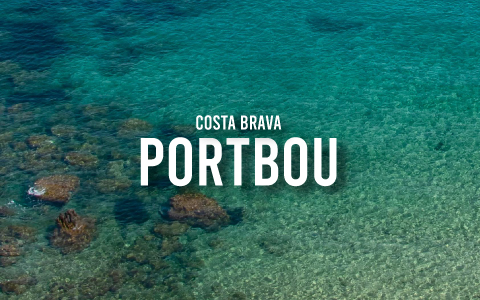
Portbou’s main beach, Platja Gran, is conveniently located close to the town center. The coastline has the rugged appearance typical of the northern Costa Brava, but its position makes the beach a practical place to relax by the water without traveling far from the main streets, cafés and restaurants.
Those wishing to explore beyond the main beach can look for Platja Petita, Cala de les Tres Platgetes and Cala del Pi.
5. The Town Centre and Waterfront
Instead of the carefully designed atmosphere of a purpose-built holiday resort, Portbou feels like a town whose identity has grown from its practical functions, its inhabitants and its connections with neighbouring regions.
The steep terrain has influenced the arrangement of the streets, creating sloping routes, staircases and closely grouped buildings that follow the shape of the valley. The central area is a good place to discover small shops, cafés and local gathering spots.
The waterfront offers a contrasting setting. An evening walk can be a lovely way to finish a day in Portbou. All you have to do is just walk and enjoy the sea, the surrounding hills and the relaxed atmosphere.
What to Do in Portbou
Portbou’s natural surroundings offer plenty of opportunities to enjoy the outdoors.
Hiking is one of the best ways to explore the area. Sections of the GR 92, the long-distance trail that follows much of Catalonia’s coastline, wind through rugged hills and along the shore, offering spectacular sea views. With routes of varying lengths and difficulty, there is something for different fitness levels. Be sure to check the weather forecast and trail conditions before setting off.
During summer, the clear waters are ideal for swimming and snorkeling, while diving offers a closer look at the local marine life. Kayaking is another way to explore the rocky coastline and discover its secluded coves.
If you are not into sports, local cuisine provides another way to appreciate Portbou’s character. The town’s restaurants draw on Catalan and Mediterranean traditions, with dishes featuring seafood, seasonal vegetables, tapas and ingredients sourced from the surrounding area. After a day spent exploring the coast, enjoying a meal at a local restaurant is a fitting way to round off the experience.
How to Reach Portbou
Portbou lies approximately 30 kilometres from Figueres and around 70 kilometres from Girona.
You can reach the town by train or by car. This last options offers greater freedom and extra time when planning excursions.
Once in town, you can reach many of the principal attractions on foot.