Drâa Valley, Morocco: A Journey Through Oases, Kasbahs, and Desert
Morocco is a country of striking contrasts and layered identities. Every time we go there, we find the perfect mix of ancient traditions and vibrant modern life. Imperial cities like Marrakesh, Fez, Meknes, and Rabat showcase centuries of history through their medinas, palaces, and mosques, while coastal towns such as Essaouira and Agadir offer Atlantic breezes and long sandy beaches. Beyond the cities, Morocco’s natural beauty unfolds in equally captivating ways: the rugged peaks of the Atlas Mountains, the dramatic gorges of Todra and Dades, and the vast dunes of the Sahara stretching toward the horizon. Among these remarkable landscapes, the Drâa Valley stands out as one of the country’s most evocative and poetic regions.
An Overview of the Drâa Valley
The Drâa Valley takes its name from the Drâa River, Morocco’s longest river, which originates in the High Atlas Mountains near Ouarzazate and once flowed all the way to the Atlantic Ocean. Today, much of its water is controlled by dams, and in many sections the riverbed is dry for large parts of the year. Yet the valley remains fertile thanks to underground water and traditional irrigation systems that sustain one of the largest palm oases in North Africa. Over millennia, the Drâa carved a wide valley through rocky plateaus and desert plains, creating a natural route for caravans traveling between sub-Saharan Africa and the cities of northern Morocco. This history of movement and exchange shaped the valley’s cultural richness: Berber, Arab, Jewish, and Saharan influences all left their mark on the architecture, traditions, and rhythms of life along the river.
Things to See and Do in the Drâa Valley
A visit to the Drâa Valley is not about ticking off a single famous monument, but about experiencing a landscape that unfolds slowly.
Expect long stretches of palm groves, mud-brick villages blending into the earth, fortified kasbahs rising above fields, and dramatic desert scenery beyond the green ribbon of the oasis. Life here moves at a gentler pace. Donkey carts share the road with modern vehicles, children walk to school along dusty paths, and farmers tend small plots of land as they have for generations.
Travelers come here for the sense of space, the authenticity of rural Morocco, and the feeling of crossing a threshold between cultivated land and the vastness of the Sahara.
Explore the Palm Groves and Oases
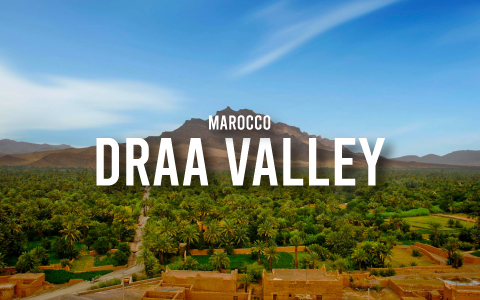
One of the defining features of the Drâa Valley is its immense palm groves, which stretch for kilometers along the river’s course.
These oases are not just picturesque landscapes but complex agricultural systems that support entire communities. Walking or cycling through the palm groves offers an intimate look at everyday life: irrigation channels crisscross the ground, small gardens grow vegetables beneath the shade of towering date palms, and families tend fields that have been cultivated for centuries.
The contrast between the lush green of the oasis and the surrounding desert is striking, especially in the early morning or late afternoon light.
Visit Traditional Kasbahs and Ksour
The Drâa Valley is rich in kasbahs (fortified homes) and ksour (fortified villages) built from adobe and earth, their walls rising in warm, earthy tones that blend seamlessly with the surrounding landscape.
Many of these structures date back centuries and once served as protection against raids and as symbols of local power. Some kasbahs are still inhabited, others stand partially in ruins, slowly returning to the desert from which they were built.
Exploring these buildings is like stepping into a different era: narrow corridors, inner courtyards, and decorative details reveal how families lived and defended themselves in the past. Visiting local villages also provides opportunities to meet residents and learn about traditional construction techniques, which are increasingly threatened by modern materials but remain uniquely suited to the valley’s climate.
Discover Agdz and Zagora
Agdz and Zagora are two of the most important towns along the Drâa Valley and serve as convenient bases for exploring the region.
Agdz, located near the northern end of the valley, is often the first stop after crossing the High Atlas from Marrakesh or Ouarzazate. Surrounded by palm groves and backed by rocky hills, it offers a peaceful introduction to oasis life.
Zagora, further south, has long been associated with caravan routes and desert journeys. Although modern in parts, it retains a frontier-town feel, where the paved road meets the open spaces of the pre-Saharan desert. Both towns provide access to nearby villages, kasbahs, and landscapes, as well as practical amenities for travelers. They are also places where you can observe the blending of traditional life with contemporary influences, from markets to cafés.
Experience Desert Landscapes and Pre-Saharan Dunes
As you move further south along the Drâa Valley, the green ribbon of palms gradually gives way to more open, arid landscapes. Low dunes, rocky plains, and wide horizons signal the approach of the Sahara.
While the massive sand dunes of Erg Chegaga and Erg Chigaga lie beyond the valley proper, the pre-Saharan scenery around Zagora offers a taste of desert travel without venturing too far off the main routes. You can explore the area with a guided excursions by 4×4 or camel.
Watching the sun set over the dunes, as the colors shift from gold to deep orange and purple, is one of those moments that stays with travelers long after they leave Morocco.
Visit Local Markets and Learn About Valley Life
Weekly markets in the towns and villages of the Drâa Valley are lively social events where people from surrounding areas gather to trade goods, share news, and maintain social ties.
These markets are less oriented toward tourism than those in big cities, offering a more authentic glimpse into rural Moroccan life. Taking time to wander through a market, even without buying much, helps you appreciate the rhythms of the valley and the importance of these gatherings in maintaining community connections. Conversations with locals—often facilitated by a guide or basic phrases in Arabic or Tamazight—can reveal stories about life in the oasis, the challenges of water management, and the balance between tradition and change.
Walk, Cycle, or Take Slow Journeys Through the Valley
The Drâa Valley is best experienced slowly. Walking through villages, cycling along quiet roads, or taking short hikes into the surrounding hills allows you to notice details that are easy to miss from a car: the sound of wind in the palms, the patterns of light on mud-brick walls, the smell of earth after irrigation.
These slower forms of travel create a deeper connection with the landscape and its people, transforming the valley from a scenic backdrop into a place of lived experiences and meaningful encounters.
How to Reach the Drâa Valley from Marrakesh and Essaouira
Reaching the Drâa Valley is part of the adventure, as the journey itself showcases some of Morocco’s most dramatic landscapes.
From Marrakesh, the most common route is by road via the High Atlas Mountains, crossing the Tizi n’Tichka pass toward Ouarzazate. This scenic drive takes you through mountain villages, winding roads, and changing landscapes before descending into the pre-Saharan region. From Ouarzazate, it’s a relatively short drive south to Agdz, the northern gateway to the Drâa Valley, and then onward to Zagora. The entire journey from Marrakesh to the valley typically takes a full day by car, but many travelers break it up with stops along the way.
From Essaouira, reaching the Drâa Valley requires crossing the interior of Morocco, usually by first traveling to Marrakesh and then continuing toward Ouarzazate and the valley. While this route is longer, it offers a fascinating cross-section of Morocco’s landscapes, from Atlantic coast to plains, mountains, and desert fringes. Renting a car or hiring a driver provides greater flexibility and allows you to stop at viewpoints and villages along the way. No matter which route you choose, the transition from bustling coastal or urban environments to the quiet expanses of the Drâa Valley makes the destination feel all the more remote and rewarding.